The City That Decided Not to Change
When the allies considered their bombing targets in World War II, Secretary of War Henry Stimson personally removed Kyoto from the list, having visited it on his honeymoon in 1926. He knew what would be lost. Today, Kyoto's preservation feels almost miraculous — a city of 1.5 million people that has maintained its temple gardens, machiya townhouses, geisha districts and traditional crafts industries while the rest of Japan rebuilt itself in concrete and glass.
When to Visit
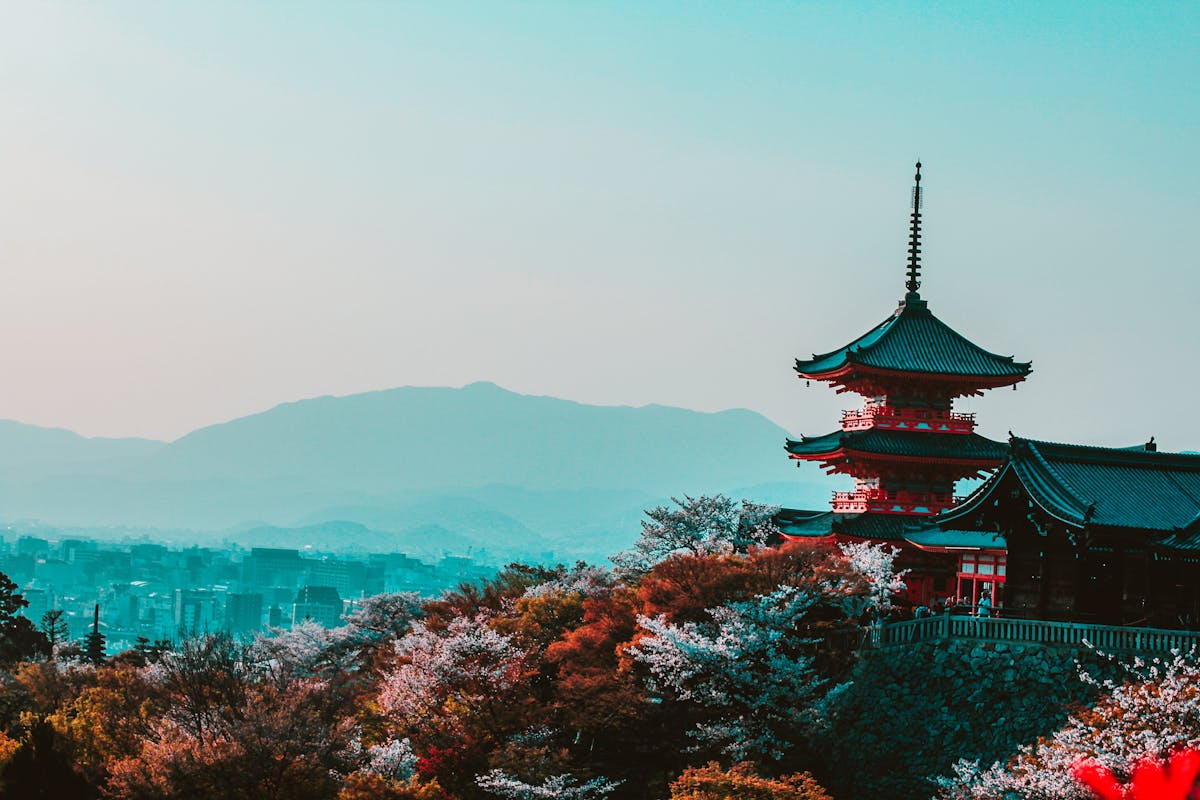
Cherry blossom (sakura) season: Late March to early April. The Maruyama Park weeping cherry, the canal walks of Philosopher's Path, and the temple gardens all reach peak bloom simultaneously. Extraordinarily beautiful; also the most crowded week of the year — book accommodation 6+ months in advance.
Autumn foliage (koyo) season: Mid-November to early December. The momiji (Japanese maple) turns the temple gardens red and orange. Quieter than sakura season, equally beautiful, and arguably the finest time to visit Kyoto.
Off-peak: January-February (cold, very quiet, often with snow on the temple roofs) and July-August (hot, humid, but with the spectacular Gion Matsuri festival — the largest traditional festival in Japan, running the entire month of July).
The Essential Kyoto
Fushimi Inari Shrine
The Fushimi Inari Taisha (free, open 24 hours) — thousands of vermilion torii gates winding up Mount Inari — is Kyoto's most photographed sight. The well-known part is the first 20 minutes; the full hike to the summit and back (2–3 hours) reveals the quieter upper sections where the gates are less dense and the mountain forest takes over. Go at dawn (before 6am) or at dusk (after 7pm in summer) for near-solitude.
Arashiyama
The Bamboo Grove in Arashiyama — a narrow path through towering green bamboo, the stalks filtering light into extraordinary patterns — is Kyoto's second most photographed image. Go early. The surrounding area is excellent: the Tenryu-ji Garden (¥500, a Zen garden around a central pond, designated a UNESCO World Heritage Site), the monkey park above the bamboo (¥550), and the riverside where cormorant fishing still happens at night in summer.
The Golden and Silver Pavilions
Kinkaku-ji (Golden Pavilion, entry ¥500) — the Zen Buddhist temple whose top two floors are covered in gold leaf, reflected in the surrounding pond — is among Japan's most recognisable images. Perpetually crowded. Go when it opens (9am). Ginkaku-ji (Silver Pavilion, entry ¥500) is equally significant and less crowded: a contemplative garden of raked sand and sculpted moss hills that represents Zen aesthetics more honestly than the gilded showpiece.
Gion and the Geisha District
Gion is Kyoto's most famous hanamachi (geisha district). The streets of Hanamikoji and Shinbashi are lined with traditional teahouses (ochaya) where geisha entertain private clients — the most exclusive dining experience in Japan, accessible only through personal introduction. Walking the Gion cobblestones at dusk, watching women in elaborate kimono pass beneath paper lanterns, is one of the most evocative experiences in Japan.
Spotting geiko and maiko: Real geiko (Kyoto's term for geisha) and their apprentices maiko leave for appointments between 5-6pm from the main hanamachi streets. Photograph them only from a respectful distance and never block their path — the recent crackdown on tourist harassment has been necessary and justified.
The Philosopher's Path
The Tetsugaku no Michi (Philosopher's Path) is a 2-kilometre canal-side walk in eastern Kyoto, lined with hundreds of cherry trees and connecting a chain of significant temples: Nanzen-ji (with its remarkable aqueduct), Eikan-do (finest autumn foliage in Kyoto), Anraku-ji and Honen-in. Walk it slowly in either direction; it takes 45 minutes if you don't stop and half a day if you do.
Nishiki Market and Traditional Food
Nishiki Market (Nishiki-koji, one block north of Shijo) — the 'Kyoto Kitchen' — is a five-block covered arcade of food stalls, traditional shops and food vendors. Try: tamagoyaki (sweet omelette on a stick, ¥200), yuba (tofu skin, a Kyoto specialty, ¥300), fresh fu (wheat gluten confection), and the famous Nishiki Waffle stuffed with sweet bean paste.
Kaiseki ryori is Kyoto's great culinary contribution — the multi-course Japanese haute cuisine that grew from the tradition of serving food to accompany the tea ceremony. A kaiseki dinner at a mid-range restaurant costs ¥10,000–25,000 per person (€60–150) and represents one of the finest dining experiences in the world. The set lunches (hiru kaiseki) at the same restaurants are ¥3,000–6,000 and far better value.
Day Trip: Nara
Nara (45 minutes from Kyoto by express train, ¥720) is one of Japan's most rewarding day trips. The 1,200 semi-wild sika deer that roam Nara Park are considered sacred messengers of the gods. Feed them shika senbei (deer crackers, ¥200) and try not to feel overwhelmed when they bow to ask for more. Todai-ji Temple (entry ¥600) houses the largest bronze Buddha in Japan (15 metres tall, cast in 752AD). The surrounding park and temples are free.